
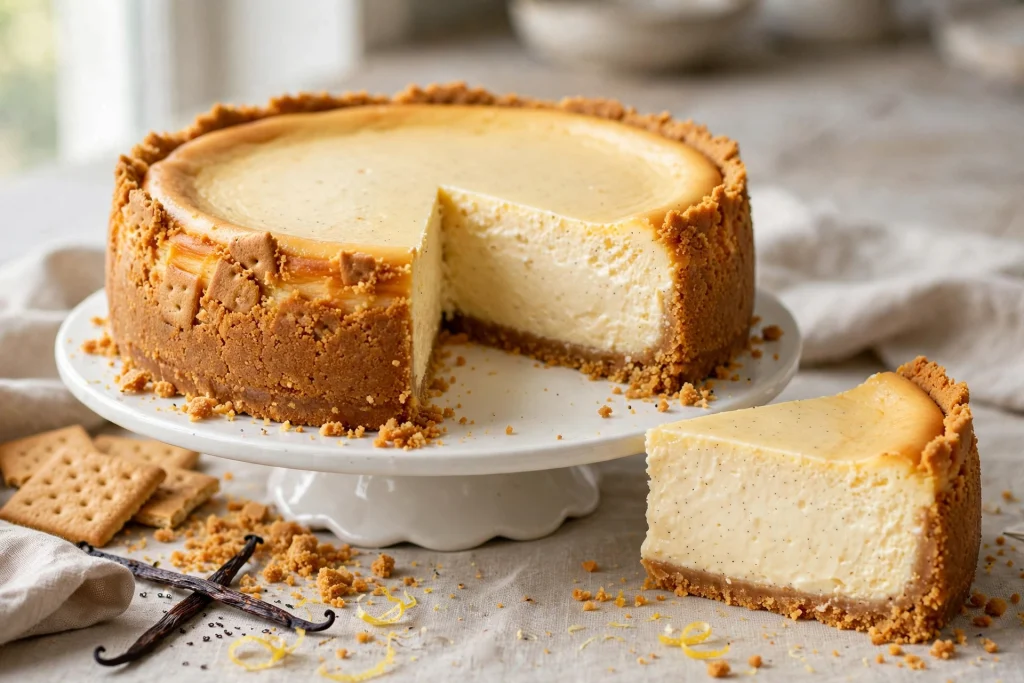
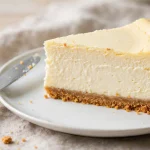
This classic cheesecake recipe delivers a rich, creamy filling in a buttery graham cracker crust, no water bath required. A crisp crust topped with smooth, dense filling is hard to beat, and when the texture is right, every bite feels a little indulgent.
This classic cheesecake recipe is built around simple ingredients and a few techniques that make a big difference. The cream cheese filling is smooth and rich without being overly sweet, while the graham cracker crust adds a buttery crunch underneath.
The key to great cheesecake isn’t complicated baking equipment or fancy ingredients. It’s knowing when to stop mixing, when to take the cheesecake out of the oven, and, perhaps hardest of all, when to leave it alone and let it chill.
Make it the day before a dinner party, top it with fresh berries for a summer dessert, or serve it plain with coffee. Once you have this recipe down, it’s an easy one to return to whenever you need a dependable dessert.
Quick Recipe Overview
| Detail | Information |
|---|---|
| Prep Time | 25 minutes |
| Bake Time | 55–70 minutes |
| Cooling Time | About 1 hour |
| Chilling Time | At least 6 hours |
| Total Time | About 8 hours |
| Yield | 10–12 slices |
| Pan | 9-inch springform pan |
Best tip: Make this cheesecake the day before serving. An overnight chill gives the filling time to fully set and makes it much easier to slice neatly.
Why You’ll Love This Recipe
Creamy and rich: the filling has a smooth, dense texture without becoming heavy or dry.
Buttery crust: a classic graham cracker crust gives the soft filling the perfect bit of contrast.
Straightforward ingredients: everything is easy to find at a regular grocery store.
Make-ahead friendly: cheesecake actually benefits from being made in advance.
Easy to customize: add berries, chocolate, caramel, lemon, or leave it perfectly plain.
Beginner-friendly: the recipe includes clear visual cues so you know when the cheesecake is properly baked.
Ingredients
For the Graham Cracker Crust
- 2 cups graham cracker crumbs
- 5 tablespoons unsalted butter, melted
- 2 tablespoons granulated sugar
- 1/8 teaspoon salt
For the Cheesecake Filling
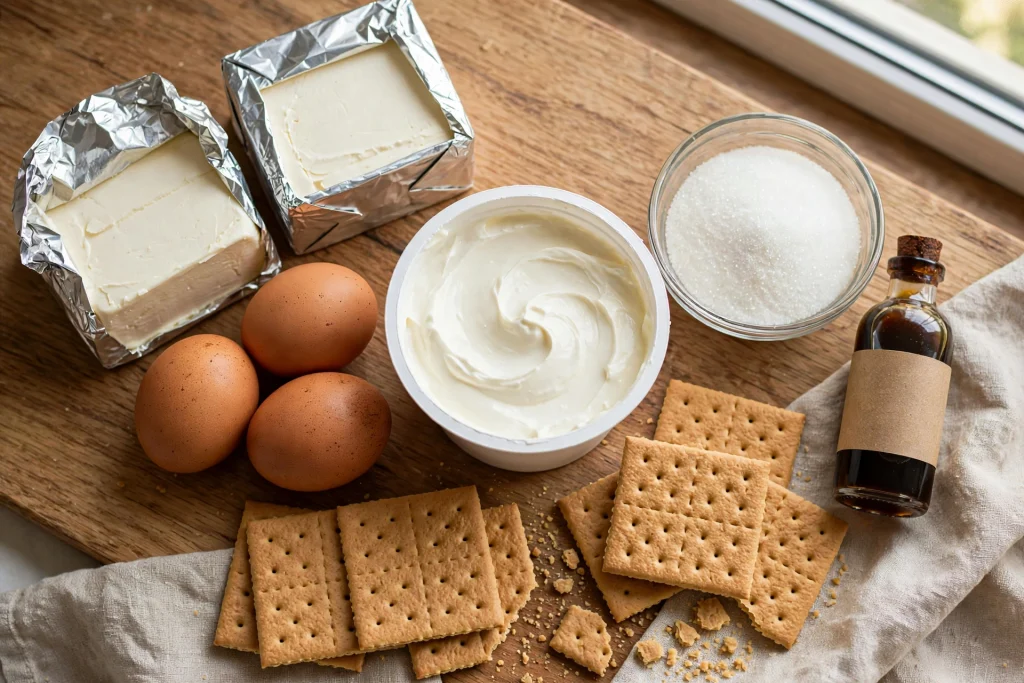
- 32 ounces full-fat block cream cheese, softened to room temperature
- 1 cup granulated sugar
- 1 tablespoon all-purpose flour
- 1/4 teaspoon salt
- 4 large eggs, room temperature
- 1 cup full-fat sour cream, room temperature
- 2 teaspoons pure vanilla extract
Ingredient Notes & Substitutions
Full-Fat Block Cream Cheese
For the best texture, use full-fat cream cheese that comes in a block. Avoid whipped or spreadable cream cheese when possible, since these products can contain additional ingredients and more moisture, which can change the consistency of a baked cheesecake. Let the cream cheese soften naturally at room temperature before you begin.
Sour Cream
Sour cream adds a gentle tang that balances the sweetness of the filling. It also helps create the smooth, creamy texture cheesecake is known for.
Eggs
Eggs provide structure and help the filling set during baking. Room-temperature eggs incorporate more easily, which means you won’t need to overmix the batter.
Graham Crackers
Graham crackers give the crust its classic flavor and texture. No graham crackers? Digestive biscuits are an excellent substitute.
Flour
The small amount of flour in this recipe helps give the cheesecake additional structure while keeping the filling creamy.
Step-by-Step Instructions
Step 1: Bring Your Ingredients to Room Temperature
Take the cream cheese, eggs, and sour cream out of the refrigerator before you start. The cream cheese should be soft enough to press easily with your finger but shouldn’t be warm or melted. This simple step makes it much easier to create a smooth filling without excessive mixing.
Step 2: Prepare the Oven and Pan
Preheat your oven to 325°F (165°C). Lightly grease a 9-inch springform pan. If you want easier removal later, line the bottom with a round piece of parchment paper.
Step 3: Make the Graham Cracker Crust
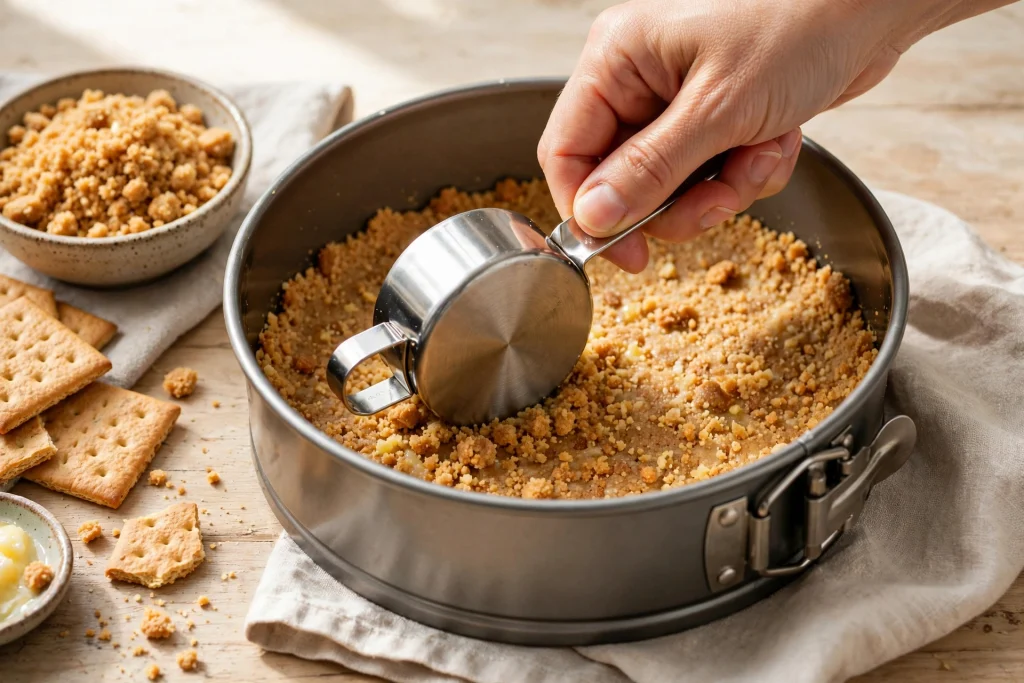
Add the graham cracker crumbs, melted butter, sugar, and salt to a bowl. Stir until all of the crumbs are evenly coated; the mixture should look and feel like damp sand. Pour it into the springform pan and press it firmly into an even layer, using the bottom of a glass or measuring cup to compact the crust. Bake for 8–10 minutes, then remove it from the oven and let it cool slightly.
Step 4: Make the Filling
Add the softened cream cheese and sugar to a large mixing bowl. Beat on low to medium-low speed until smooth and creamy, stopping occasionally to scrape the sides and bottom of the bowl. Add the flour and salt and mix briefly. Add the eggs one at a time, mixing on low speed just until each egg is incorporated. Add the sour cream and vanilla and mix until the batter is smooth. Once the filling is smooth, stop mixing.
Step 5: Fill the Pan
Pour the cheesecake filling over the slightly cooled crust and use a spatula to smooth the surface. If you notice a few large bubbles, gently tap the pan against the counter once or twice — you only need to release obvious air pockets, so avoid repeatedly banging the pan.
Step 6: Bake the Cheesecake
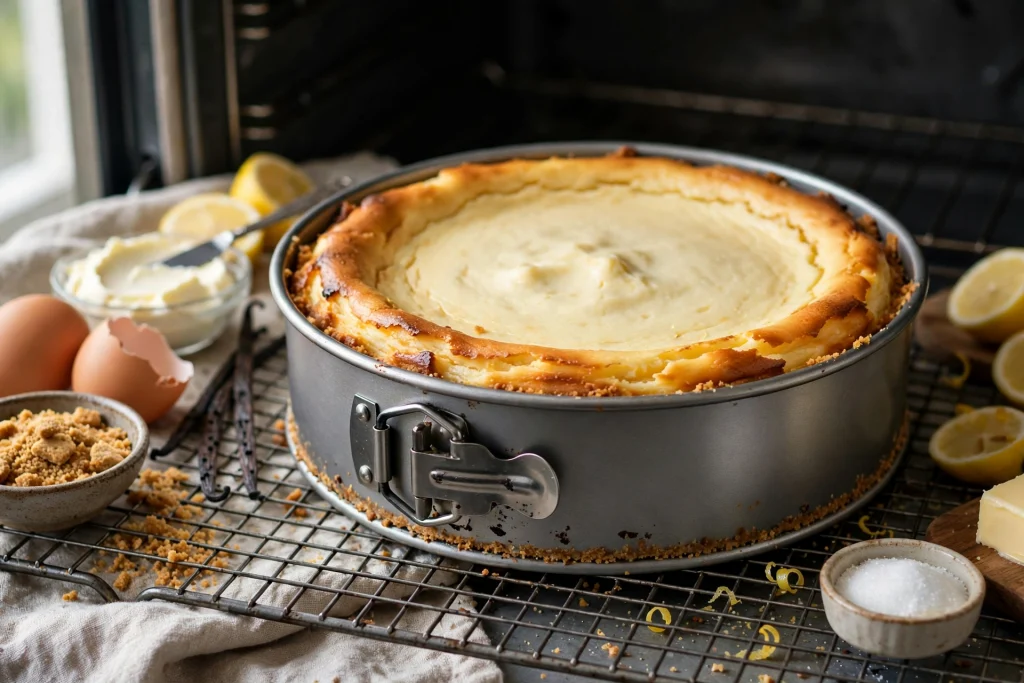
Place the cheesecake in the center of the oven and bake for 55–70 minutes, starting to check toward the end of that range. The edges should look set, while the center should still have a gentle wobble when the pan is carefully moved. The center should not look liquid or slosh around; you’re looking for the movement of a soft custard. Don’t worry if it doesn’t look completely firm yet, since the cheesecake will continue to set from residual heat and will become much firmer as it chills.
Step 7: Cool It Gradually
Once the cheesecake is baked, turn off the oven and leave the cheesecake inside with the oven door slightly open for 30–60 minutes. This gradual cooling helps minimize the temperature shock that can cause cracks. After that, remove the cheesecake and let it cool completely at room temperature.
Step 8: Chill Thoroughly
Once the cheesecake has cooled completely, cover it and refrigerate for at least 6 hours, or overnight for the best texture. This isn’t a step to rush — the refrigerator is where the cheesecake finishes setting and develops its firm-but-creamy texture.
Step 9: Slice and Serve
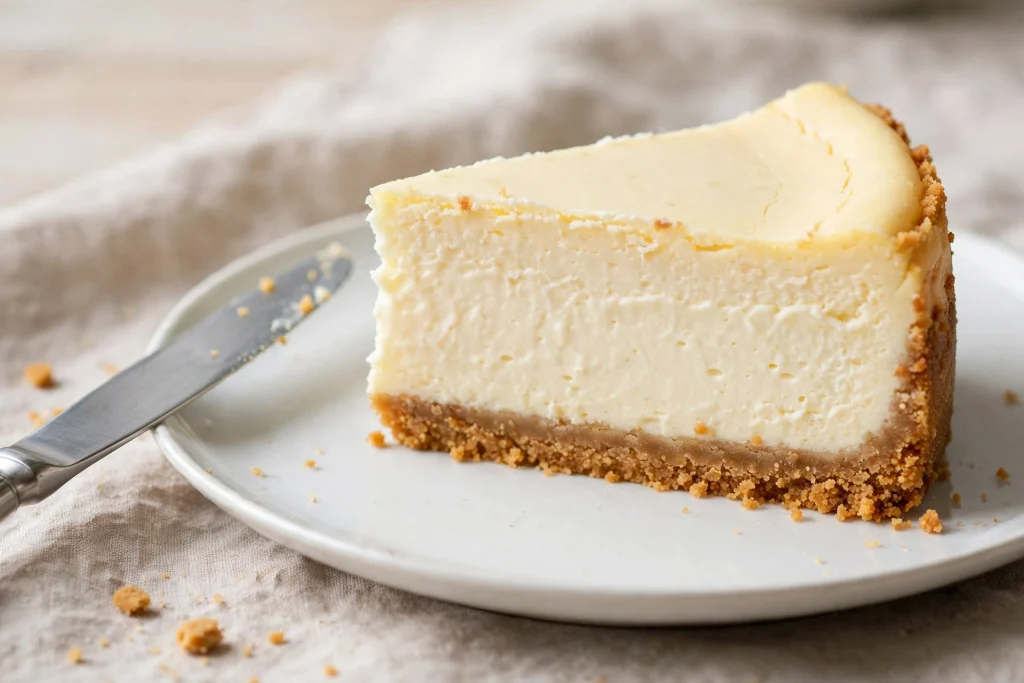
Once thoroughly chilled, carefully release the springform pan. For clean slices, run a sharp knife under hot water, then wipe it completely dry. Make one cut, wipe the knife clean, and repeat. Serve the cheesecake plain or add your favorite topping.
Expert Tips & Common Mistakes
How Do You Know When Cheesecake Is Done?
Don’t wait for the center to become completely firm in the oven. Instead, look for set edges that appear firm and slightly puffed, a gentle center wobble that moves slightly when the pan is carefully shaken, no liquid movement or sloshing, and a mostly set surface that looks stable rather than fluid. If the entire cheesecake is completely firm before it comes out of the oven, there’s a good chance it’s been baked too long.
Do You Need a Water Bath?
No. A water bath can help cheesecake bake gently and evenly, but it isn’t essential for this recipe. Skipping the water bath also means you don’t have to worry about wrapping your springform pan tightly or accidentally getting water into the crust. If you prefer using one, you certainly can, but for a straightforward homemade cheesecake, careful mixing, moderate heat, and gradual cooling are enough.
How to Prevent Cheesecake Cracks
Avoid overmixing, especially after adding the eggs, since extra air is one of the easiest things to introduce into cheesecake batter. Use room-temperature ingredients so soft cream cheese blends smoothly without requiring aggressive mixing. Don’t overbake — a slight wobble in the center is a good thing. Cool the cheesecake gradually rather than exposing a hot cheesecake to a cold environment right away. Try to leave the cheesecake undisturbed while it bakes, since frequent temperature changes can affect the way it sets.
What If My Cheesecake Cracks?
Leave it alone — a cracked cheesecake is still a perfectly good cheesecake. Once it’s chilled, cover the top with fresh berries, whipped cream, chocolate ganache, caramel, or fruit sauce. Nobody is going to complain about a crack when there’s cheesecake on the plate.
Common Cheesecake Problems and How to Fix Them
Lumpy cheesecake: The cream cheese was probably too cold or wasn’t mixed smoothly before the other ingredients were added. Next time, bring the cream cheese to room temperature and beat it until smooth before adding the eggs.
Cracked cheesecake: It may have been overmixed, overbaked, or cooled too quickly. Next time, mix gently, remove it while the center still has a slight wobble, and cool it gradually.
Cheesecake too soft: If it has only recently come out of the oven, don’t panic, since cheesecake firms considerably as it cools and chills. Next time, make sure the center is gently wobbly rather than liquid when you remove it from the oven, and give it at least 6 hours in the refrigerator.
Dry cheesecake: Overbaking is the most likely culprit. Next time, take it out when the edges are set but the center still has a slight wobble.
Sunken cheesecake: Some settling is completely normal. A significant collapse can be caused by too much air in the batter, overbaking, or rapid cooling.
Variations
Fresh Berry Cheesecake
Top the chilled cheesecake with strawberries, blueberries, raspberries, or blackberries. The fresh acidity helps balance the richness of the filling.
Strawberry Cheesecake
Add strawberry sauce and a handful of sliced strawberries just before serving.
Chocolate Cheesecake
Drizzle slices with chocolate ganache and finish with chocolate shavings.
Caramel Cheesecake
Add caramel sauce just before serving. A tiny pinch of flaky salt makes the caramel flavor even better.
Lemon Cheesecake
Serve with lemon curd and a little fresh lemon zest for a bright contrast to the rich filling.
Serving Suggestions
The cheesecake is delicious on its own, but it also pairs well with fresh strawberries, blueberries, raspberries, strawberry sauce, raspberry sauce, whipped cream, caramel sauce, chocolate ganache, or lemon curd. It’s a reliable make-ahead dessert for dinner parties, holidays, and birthdays, since it can be fully prepared and chilled before guests arrive.
Storage & Reheating
Refrigerator Storage
Keep leftover cheesecake covered and refrigerated, and enjoy it within several days for the best quality. Covering the cheesecake helps prevent the surface from drying out and keeps the dessert from absorbing other odors in your refrigerator.
Freezing Instructions
Cheesecake freezes well, especially when you freeze individual slices. Chill the cheesecake completely, cut it into individual slices, wrap each slice tightly, and place the wrapped slices in a freezer-safe container or bag. Freeze until needed, and thaw overnight in the refrigerator for the best texture.
FAQs
Why Is My Cheesecake Still Soft After Baking?
Cheesecake is supposed to be soft in the center when it first comes out of the oven. It continues setting as it cools and chills. If the center was liquid rather than gently wobbly, it may need additional baking time.
How Long Should Cheesecake Chill?
Chill it for at least 6 hours, but overnight is preferable.
Can I Use Digestive Biscuits Instead of Graham Crackers?
Yes. Digestive biscuits are one of the easiest substitutes for graham crackers.
Can I Use Low-Fat Cream Cheese?
You can, but full-fat block cream cheese gives the richest flavor and most reliable texture.
Can I Make Cheesecake Without a Springform Pan?
Yes, although a springform pan makes removal much easier. If using another pan, line it carefully with parchment so you can lift the cheesecake out.
Why Does Cheesecake Taste Better the Next Day?
The filling has more time to fully set and the flavors have time to settle together. That’s why making cheesecake the day before is often the best approach.
How Do I Get Perfectly Clean Cheesecake Slices?
Use a sharp knife warmed under hot water. Wipe it completely dry before cutting, then clean and rewarm the knife between slices.
Final Thoughts
This classic cheesecake is proof that a great dessert doesn’t need to be complicated. The ingredients are simple, the method is straightforward, and most of the work is really about paying attention to a few important details. Use softened cream cheese, mix the filling gently, watch for that soft center wobble, and give the cheesecake plenty of time to cool and chill. Do those things and you’ll have a cheesecake that’s rich, creamy, beautifully sliceable, and just as good served plain as it is covered in berries or chocolate.
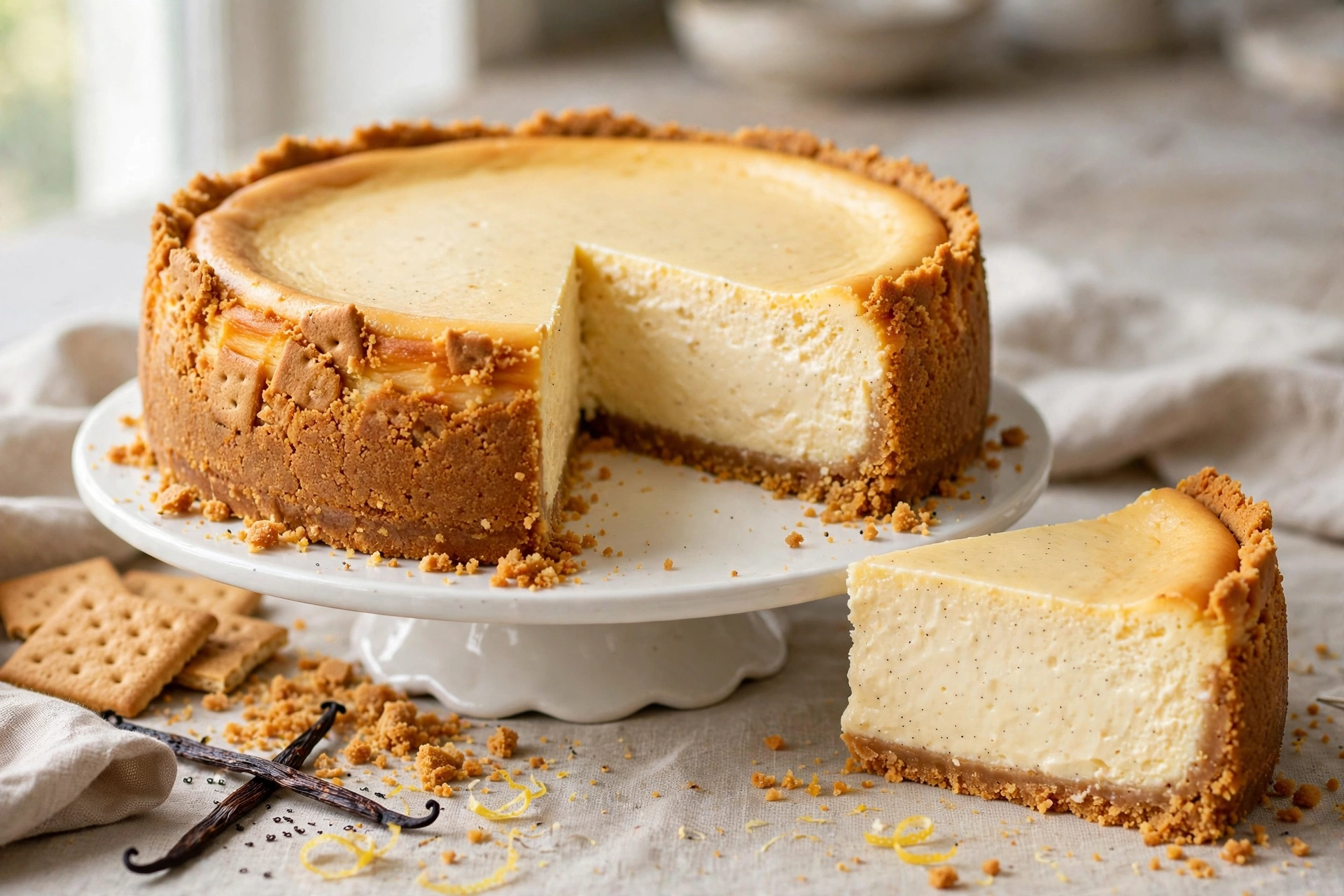
Classic Cheesecake
Ingredients
Equipment
Method
- Preheat the oven to 325°F (165°C). Lightly grease a 9-inch springform pan.
- Mix graham cracker crumbs, melted butter, sugar, and salt until evenly combined.
- Press the crust firmly into the bottom of the pan.
- Bake for 8–10 minutes. Remove and let cool slightly.
- Beat softened cream cheese and sugar on low to medium-low speed until smooth.
- Mix in the flour and salt.
- Add the eggs one at a time, mixing gently after each addition.
- Add sour cream and vanilla. Mix just until smooth.
- Pour the filling over the crust and smooth the top.
- Bake for 55–70 minutes, until the edges are set and the center has a gentle wobble.
- Turn off the oven and leave the cheesecake inside with the door slightly open for 30–60 minutes.
- Remove and cool completely at room temperature.
- Cover and refrigerate for at least 6 hours, preferably overnight.
- Release the springform pan, slice with a warm dry knife, and serve.
[…] Classic Cheesecake Recipe (Creamy & Foolproof) […]